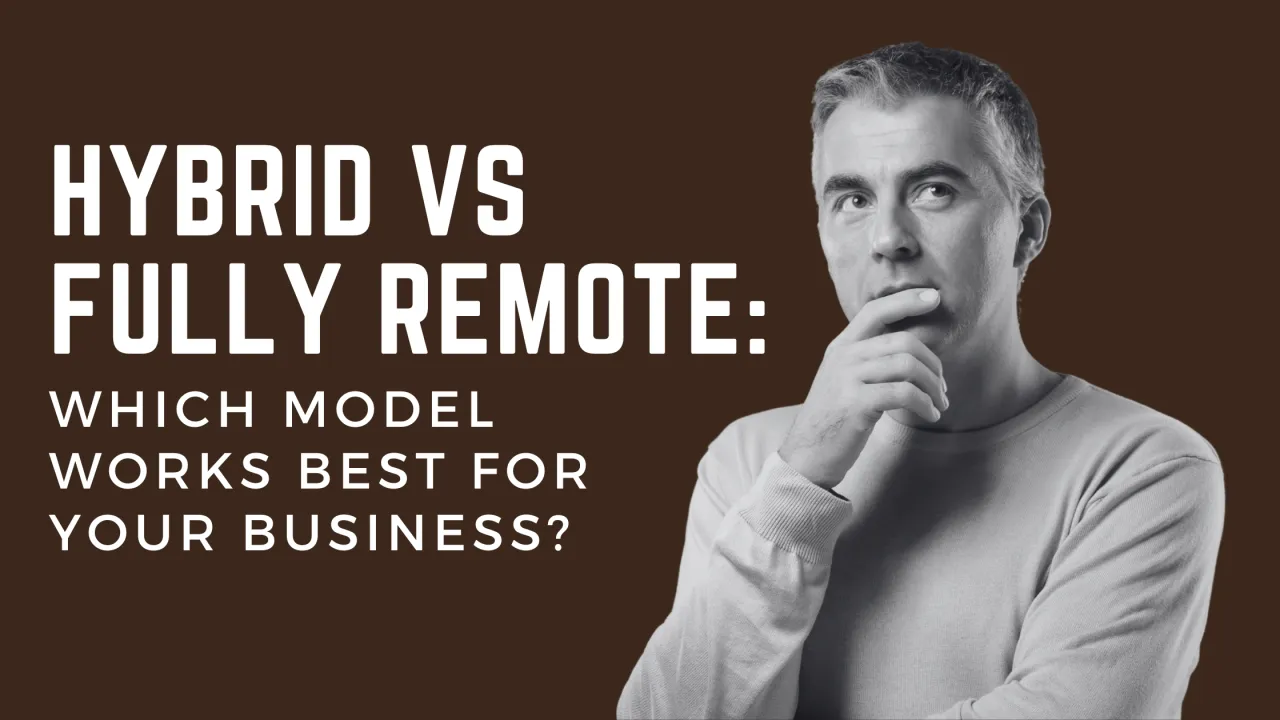
Businesses today are rethinking the way they structure work. The two most prominent models: hybrid and fully remote offer unique benefits and challenges, and the choice between them can have a lasting impact on company culture, productivity, and growth. The question is not simply which is better overall, but which is better for your specific business.
The Hybrid Advantage
The hybrid model offers flexibility without giving up the benefits of in-person collaboration. It works especially well for organizations that thrive on face-to-face brainstorming, client interactions, or team building. By allowing employees to split time between home and the office, hybrid setups provide a balance between autonomy and connection. However, this model requires careful planning. Without clear scheduling, equitable policies, and intentional communication, hybrid teams can slip into favoritism where in-office employees receive more attention and opportunities than their remote peers.
The Fully Remote Model
A fully remote model, on the other hand, removes the office entirely and leans into the advantages of a distributed workforce. Companies that embrace this approach cut real estate costs, expand their access to global talent, and give employees maximum flexibility in how they structure their workday. This model can be a strong draw for professionals seeking work-life balance, but it comes with its own demands. Fully remote organizations must invest in robust digital infrastructure and take deliberate steps to nurture culture, engagement, and collaboration, things that don’t happen organically when people never meet in person.
Ultimately, the choice depends on several key factors. The nature of your work should guide your decision. If tasks can be handled digitally, a remote-first approach may be more sustainable, while industries that rely heavily on physical presence may benefit from hybrid. Employee preferences also play a crucial role, as many professionals now prioritize remote-first roles but some still value office interaction. Cost structure matters too: fully remote eliminates overhead, while hybrid often means retaining some office space. Most importantly, culture and trust need to be maintained regardless of the model, and that requires strong, intentional leadership.
Finding the Right Fit
There is no universal answer to which model works best. Some businesses thrive in hybrid setups where flexibility meets collaboration, while others excel in fully remote environments built on trust and digital-first processes. What matters most is aligning your workplace strategy with your industry needs, employee expectations, and long-term goals. The right choice is the one that not only supports your business objectives but also empowers your people to perform at their best.
How NKR Recruit Can Help
At NKR Recruit, we understand that whether you choose hybrid or fully remote, success depends on having the right people in the right roles. We specialize in connecting businesses with skilled Virtual Professionals who can seamlessly integrate into your operations, no matter where or how your team works. By focusing on long-term fit, continuity, and trust, we help organizations build flexible teams that grow with them. Our role is simple: to support your business in finding the talent you need, so you can focus on what you do best.
NKR Recruit is a dedicated team focused on staffing the right Virtual Professionals for Small and Medium-sized Businesses (SMBs), Entrepreneurs, and Solopreneurs. We help our clients grow by bringing them quality talent through our excellent staffing and recruiting solutions at a fraction of the cost.
 Skip to content